
Earning a living. Making money. Doing something for the future.
Without even realizing it, we may have come to measure the value of things and experiences by whether they are “useful” or “useless.”
But does something that is not useful really have no value?
In this article, I look back on my artwork, “STILL HERE — Still Here,” presented at the 6 Seeds Exhibition Vol.7, and introduce the ideas and process behind its creation.
Using old study notebooks and discarded paper, I created a collage that explores our changing sense of what it means to be useful, drawing on memories and experiences from the past.
At the exhibition, visitors were invited not only to view the artwork but also to write their own thoughts in a notebook in response to the question, “What does it mean to be useful?”
Their words revealed perspectives I had not anticipated, shaped by their individual experiences and lives.
I hope this work offers an opportunity to reflect on the value of things, memory, and time.
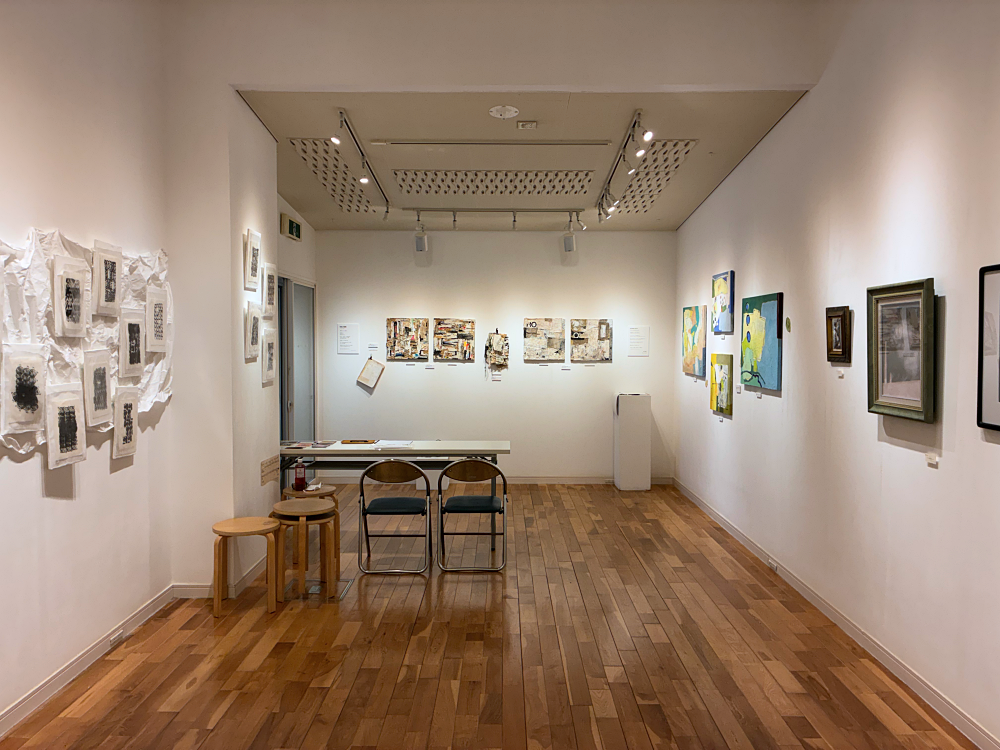
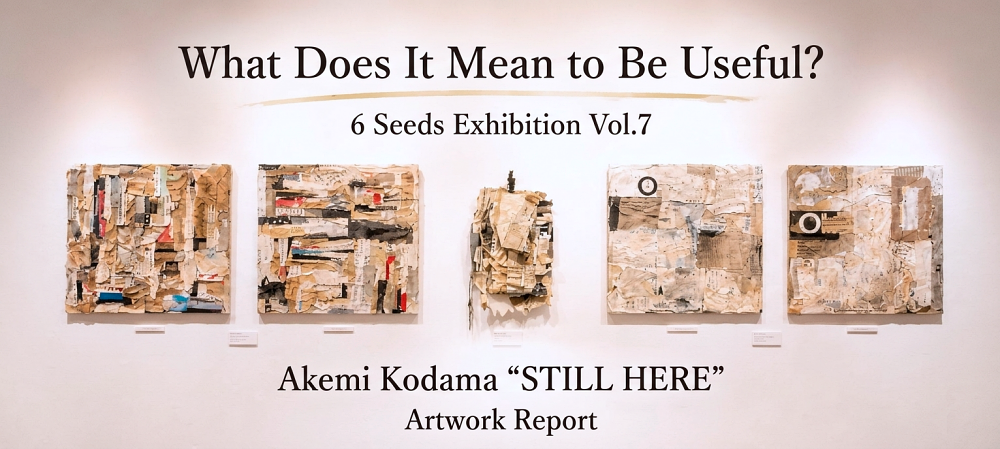
Overall view of the 6 Seeds Exhibition Vol.7
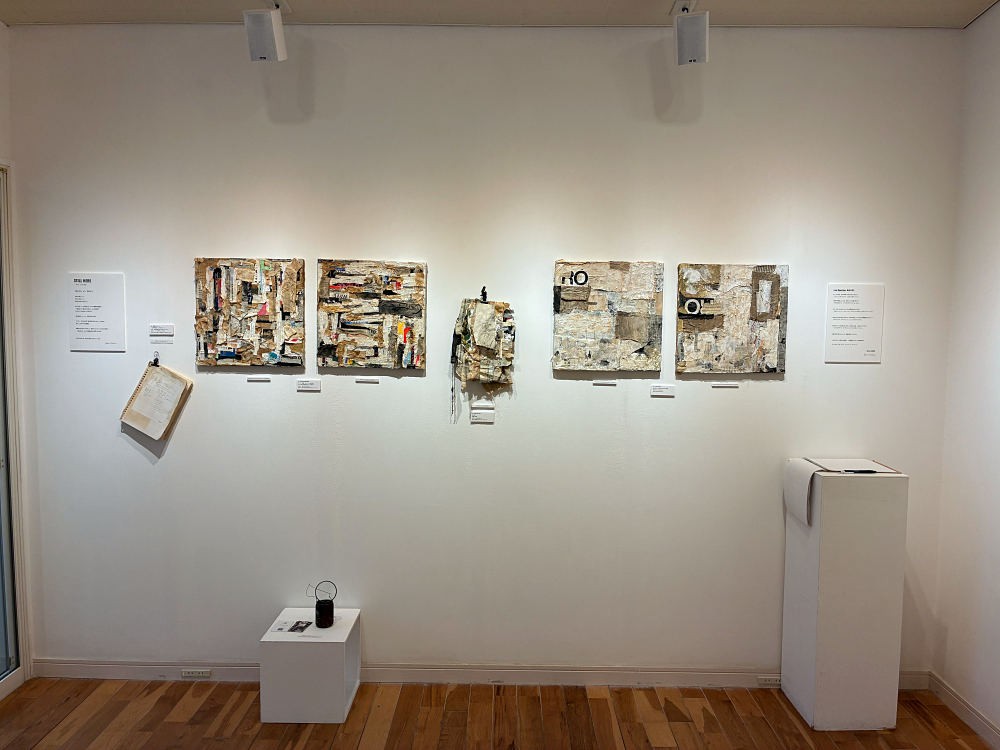
STILL HERE — Exhibition wall
The Theme of “STILL HERE”
What I explored in this work were things that have been forgotten over time or are no longer in use.
Old study notebooks, paper that had served its purpose, and my own childhood experience of being told that “drawing is useless,” which led me to stop drawing.
Using these things as materials, I explored how our perception of what is “useful” can change through the process of making art.
Have the things we forgotten really disappeared?
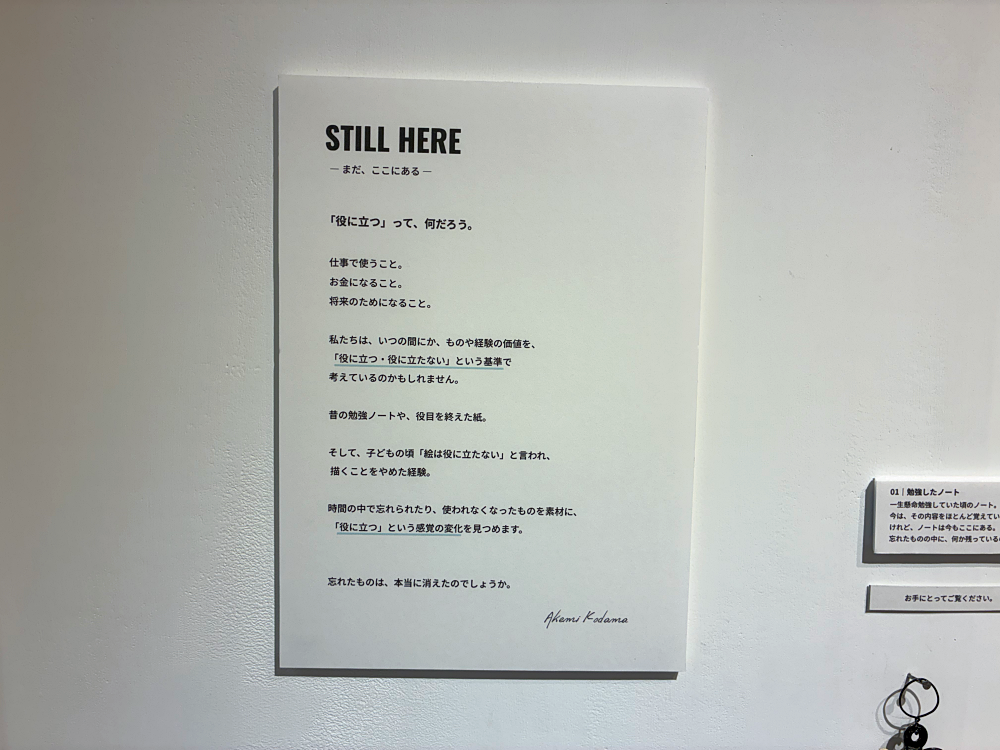
Exhibition panel: “STILL HERE — Still Here”
STILL HERE
What does it mean to be useful?
Something we use at work.
Something that earns money.
Something that helps us in the future.
Without even realizing it, we may have come to measure the value of things and experiences by whether they are “useful” or “useless.”
Old study notebooks and paper that has served its purpose.
And my childhood experience of being told that “drawing is useless,” which led me to stop drawing.
Using things that have been forgotten over time or are no longer in use, I explore how our sense of what is useful can change.
Have the things we forgotten really disappeared?
What Remained in an Old Study Notebook | Background to the Artwork
One of the materials I used for this work was an old study notebook.
It was actually a notebook from the time when I was learning a 3D software program called MAYA.
Back then, I was focused on learning how to use the software and mastering its techniques. Today, I have forgotten much of what I studied. The software I used at the time is no longer something I can use in the same way.
But when I open the notebook, I can still see traces of the experiments and efforts I made back then.
Even if I have forgotten much of what I learned, the basic knowledge I gained, the experience of creating something, and the feeling that I was capable of doing it may still be connected to who I am today.
The notebook holds more than just knowledge.
I feel that it also preserves the time I spent learning and the person I was at that moment, trying to acquire something new.
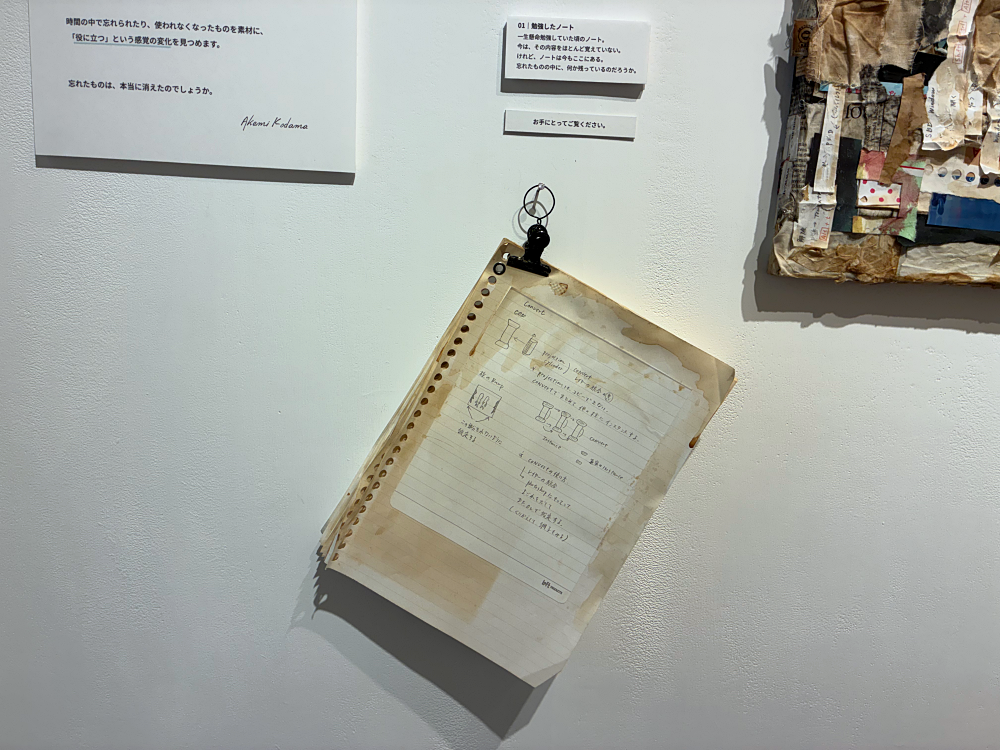
01 | The Study Notebook
A notebook from a time when I was studying hard. I can barely remember its contents now. And yet, the notebook is still here. Is something left behind in the things we have forgotten?
Artwork | Collages Layering Old Paper and Memories
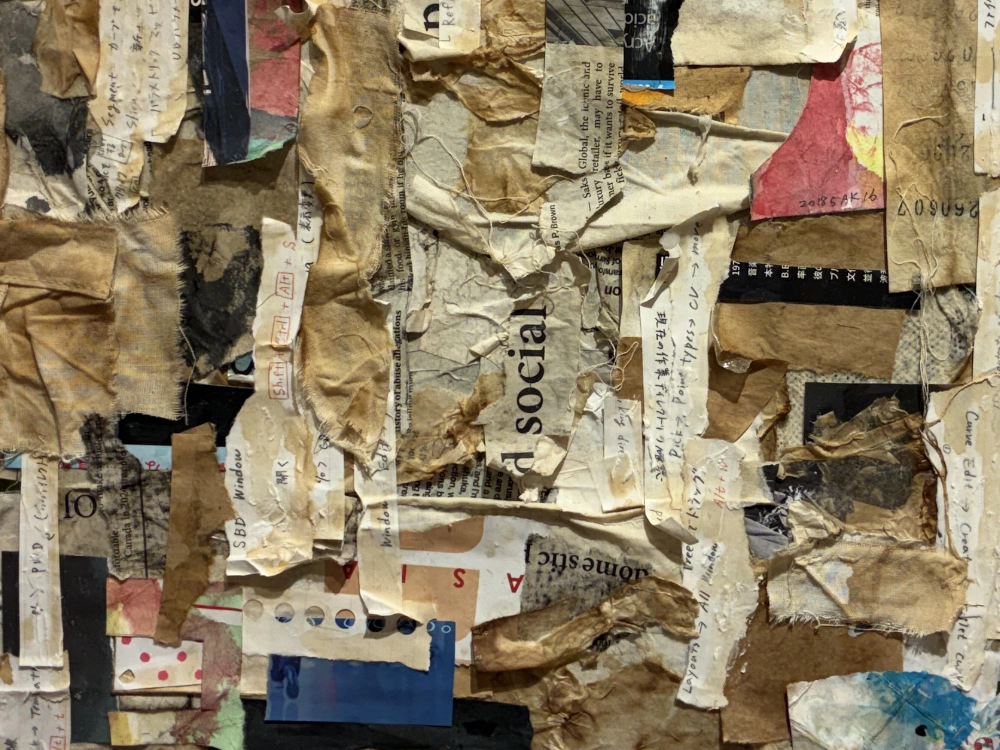
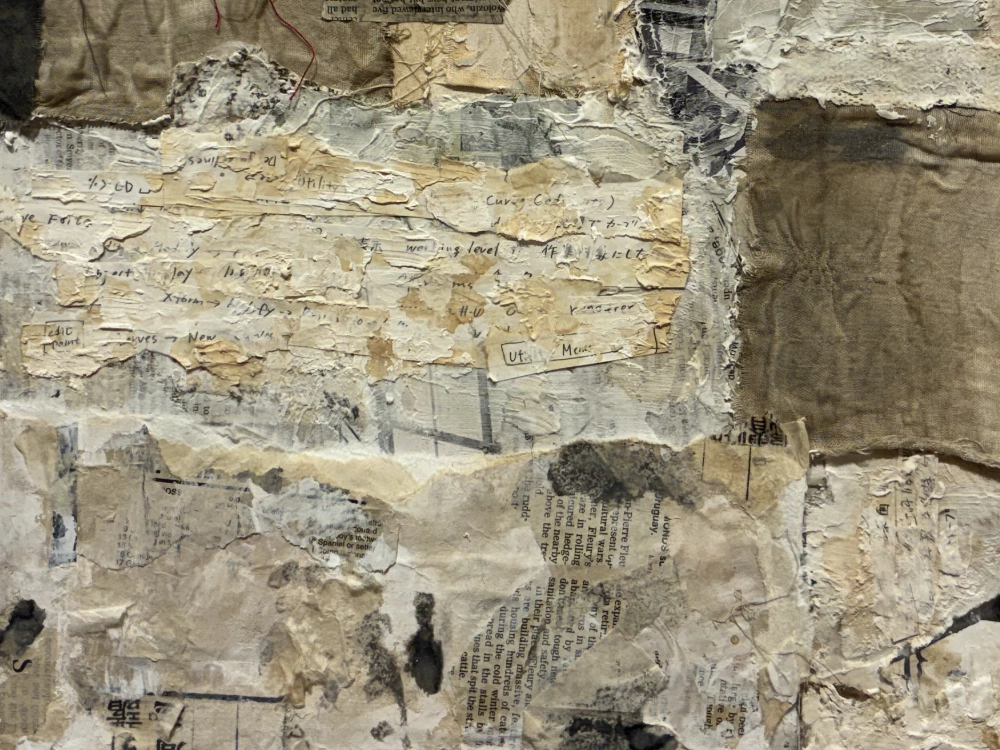
I combined old paper, fragments of notebooks, and other materials that once served a purpose to create collage works.
By layering paper, concealing words, and adding layers of white, things that were once visible disappear, while things that were hidden begin to emerge.
The time held within the materials, and the new time added to them.
As these layers come together, they gradually become a single artwork.
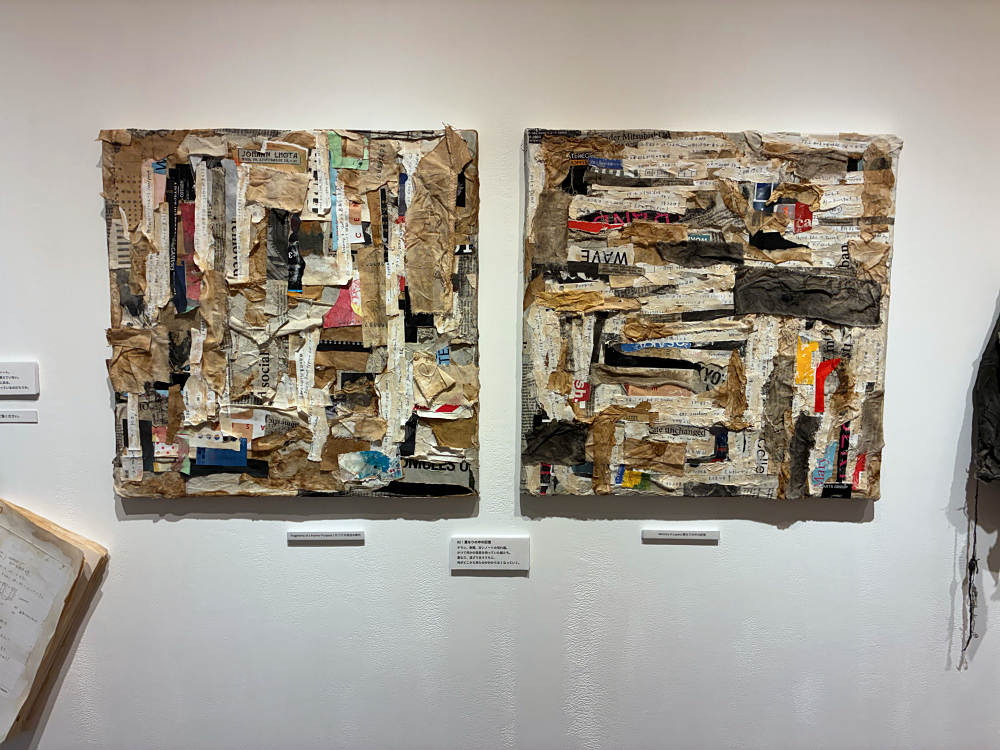
02 | Memories in Layers
Flyers, newspapers, and fragments of old notebooks. Papers that once had a purpose. They overlap and blend together until it becomes impossible to tell where one came from or another began.
Left: Fragments of a Former Purpose
Right: Memory in Layers
 |
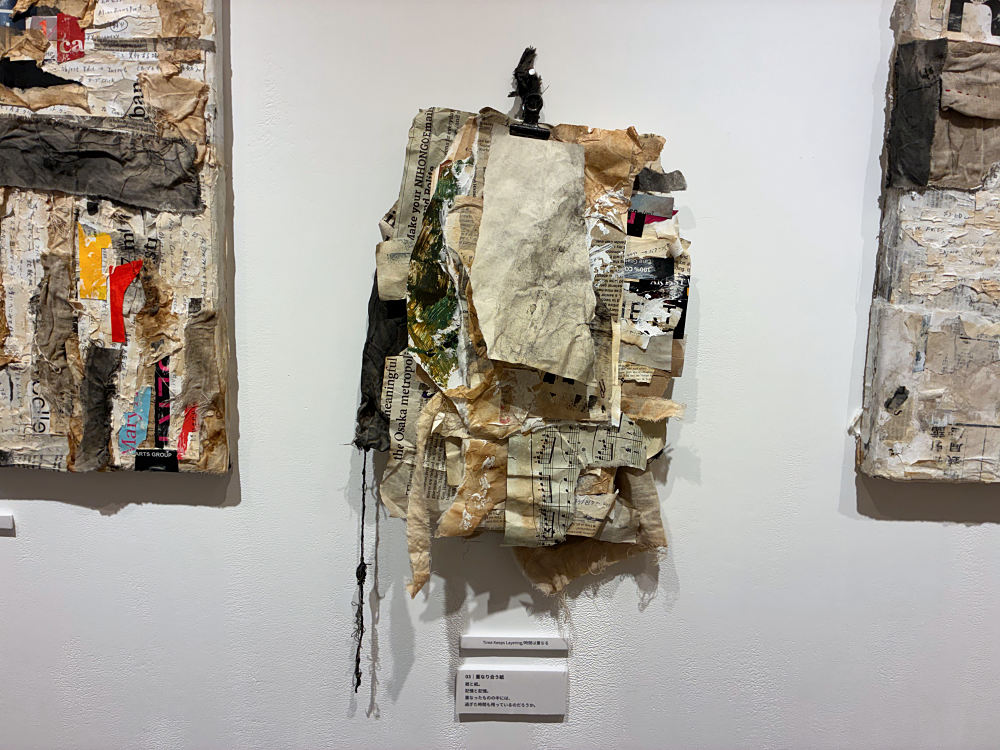
03 | Layers of Paper
Paper upon paper. Memory upon memory. I wonder whether the layers hold traces of time that has already passed.
Title: Time Keeps Layering
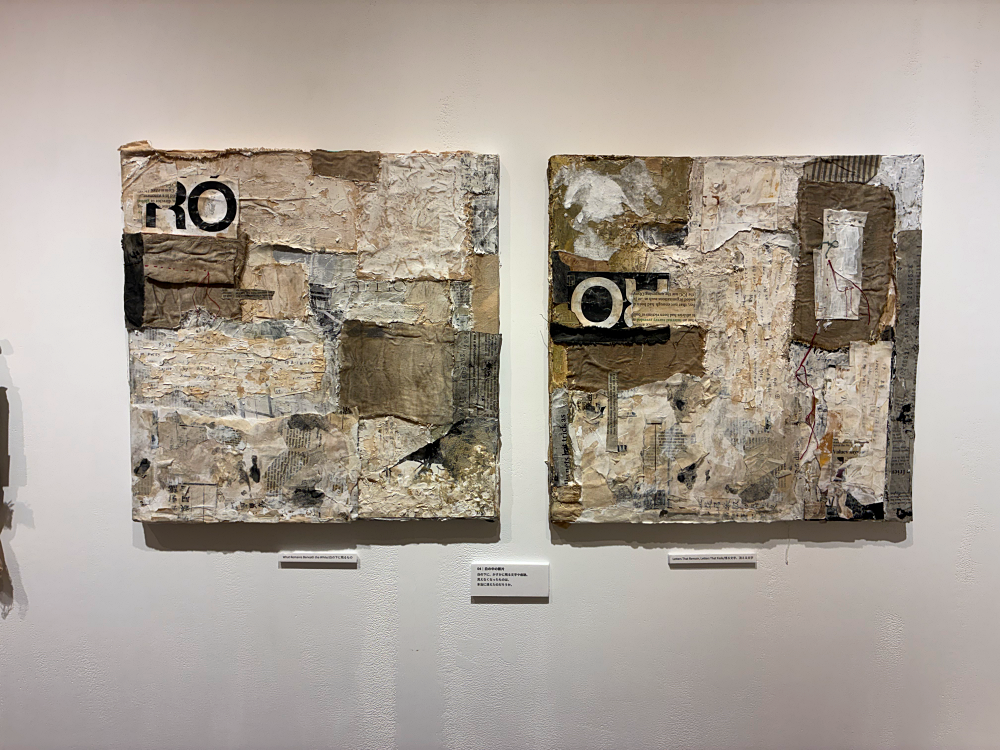
04 | Fragments Within White
Faint letters and traces remain beneath the white surface. Have the things that are no longer visible really disappeared?
Left: What Remains Beneath the White
Right: Letters That Remain, Letters That Fade
 |
Five Questions for Visitors | Reflecting on What It Means to Be Useful
For this exhibition, I prepared five questions to invite visitors to reflect on the theme themselves.
I wanted the experience to go beyond simply looking at the artwork and become an opportunity for each person to look back on their own experiences and memories.
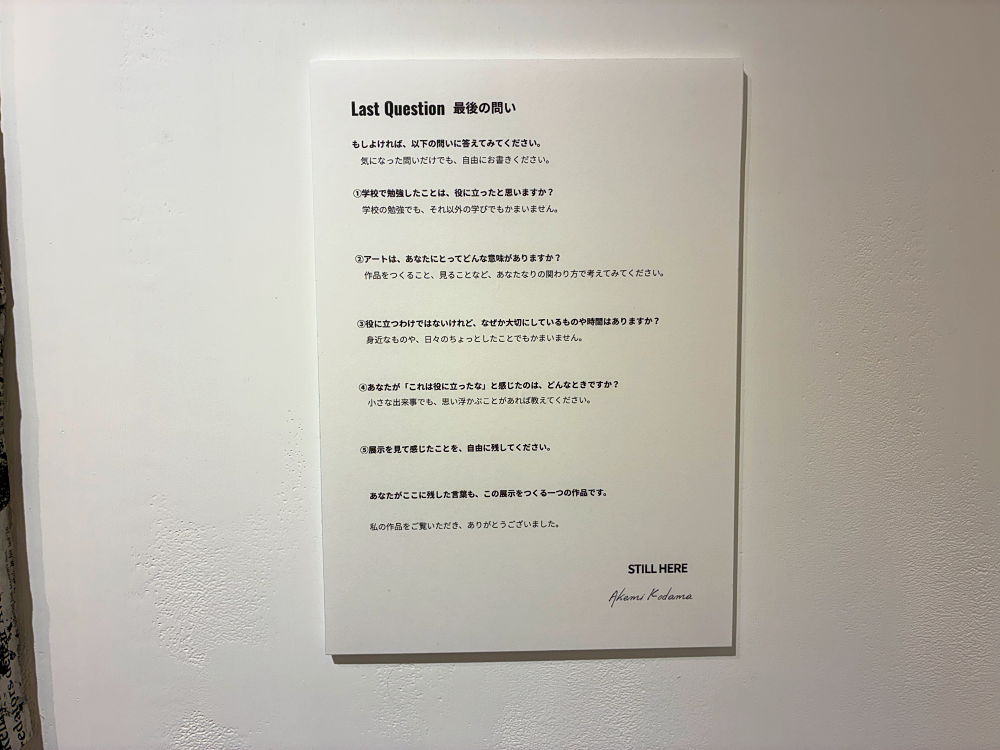
The “Last Question” board displayed at the exhibition
Last Question
If you feel like it, please take a moment to respond to the following questions.
You are welcome to answer only the ones that interest you.
① Do you think what you learned at school has been useful?
This can include anything you learned at school or through other experiences.
② What does art mean to you?
Think about art in your own way, whether through making or viewing it.
③ Is there anything, or any moment in your life, that you treasure even though it may not be useful?
It could be something familiar or an ordinary moment in your everyday life.
④ When have you felt that something was truly useful?
Even a small experience is worth sharing.
⑤ Please feel free to write down anything you felt while viewing the exhibition.
The words you leave here also become part of this exhibition.
Thank you for taking the time to view my work.
What Visitors' Responses Revealed About the Meaning of Being Useful
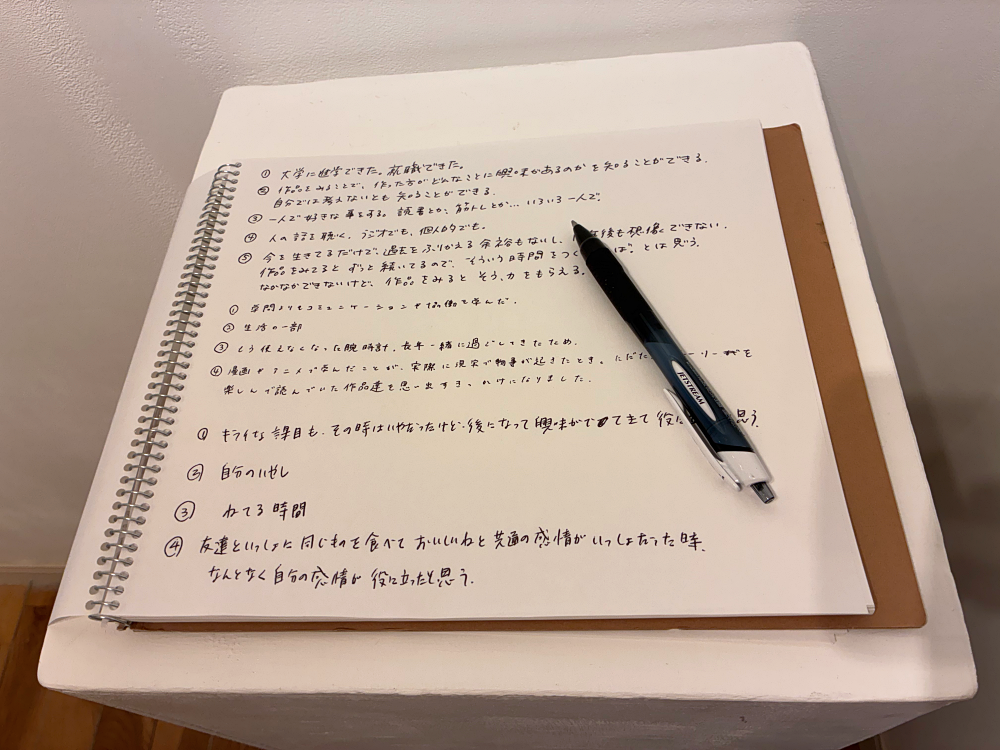
Words written by visitors during the exhibition
During the exhibition, visitors left a wide variety of responses in the notebook.
Some felt that what they had learned at school had been useful, while others felt it had not. Their views on art also varied: some saw it as a way to express themselves, others as part of everyday life or as something that gives them emotional support.
Here, I would like to share some of the responses that stayed with me.
Some wording has been lightly edited for readability.
① Do you think what you learned at school has been useful?
I feel that the subjects I disliked haven't been useful to me.
Even the subjects I hated at the time have become interesting to me later in life, and I now feel they have been useful.
I learned more about communication and collaboration than academic subjects.
Even when people share the same experience of school, the way they look back on it can be very different.
Something that seemed unnecessary at the time may become useful later. Another visitor felt that what they had learned about interacting and working with others was more valuable than the academic subjects themselves.
Perhaps we cannot always tell whether something will be useful while we are learning it.
② What does art mean to you?
Getting to know myself.
A way to express my own thoughts and feelings.
By looking at an artwork, I can discover what the artist is interested in. I can also encounter ideas that I would never have thought of on my own.
Some people see art as a way to understand their own inner world, while others see it as a way to encounter the thoughts and perspectives of others.
Whether making art or viewing it, I felt that both offer the possibility of discovering something we might not have noticed on our own.
③ Is there anything, or any moment in your life, that you treasure even though it may not be useful?
Time spent relaxing in a park.
An old watch that no longer works. I've spent many years with it.
Sleeping.
Small paths I used to walk, landscapes, sounds, voices, and so on.
Time spent relaxing in a park, a watch that no longer works, and the landscapes and sounds of a path someone once walked.
None of these things necessarily produce any particular result. Yet they remain important to the people who shared them.
Perhaps there are many kinds of value in our everyday lives that cannot be measured by whether something is useful.
④ When have you felt that something was truly useful?
When I shared something I knew with someone and it made them happy.
Listening to other people's stories, whether on the radio or in person.
When I eat something together with a friend and we both feel, “This is delicious!” Somehow, I feel that my feelings have been useful.
Sharing knowledge with someone, listening to another person's story, and enjoying the same food together while sharing the feeling that it tastes good.
Here, being useful was not limited to work or achievements. It also included the small joys and connections that arise through relationships with others.
⑤ Please share anything you felt while viewing the exhibition.
I'm so busy just living in the present that I don't have much time to look back on the past, and I can't imagine what life will be like ten years from now. But when I look at the artwork, I see something that has continued over time. It makes me feel that I should make time to reflect like that. I don't manage to do it very often, but the artwork gives me that encouragement.
I felt the time, history, and process held within “material things.” Although the work takes the form of a single canvas, I sensed the enormous span of time contained within it.
As expected — orderly and chaotic at the same time.
Some visitors found themselves thinking about their own past and the passage of time through the artwork.
Others sensed the time accumulated within the materials themselves. I was also struck by the concise description, “orderly and chaotic at the same time.”
Even when looking at the same artwork, people notice different things and are reminded of different experiences.
I felt that the questions I had embedded in the work had connected with each visitor's own experiences and returned to me in the form of different words.
Unexpected Words Encountered at the Exhibition
Among the responses were words that made me stop and think.
Studying is fun. I don't know if it's useful exactly... perhaps it becomes nourishment for life.
I like things that have no meaning... perhaps because they have no meaning.
I want to treasure the time I spend doing things that have no particular meaning.
When we step away from the standard of whether something is useful, we begin to notice moments that do not even need to have a purpose, and things we continue doing simply because we enjoy them.
There was another response that stayed with me:
Moving forward is important, but looking back is also necessary. However, perhaps we should only look back briefly and not remain standing still...
Looking back at the past and moving forward.
In this work, I used old notebooks and paper to look at time that had already passed. But perhaps looking back does not simply mean returning to the past.
By looking at what remains there, we may also become aware of who we are today.
I also received responses from visitors from overseas.
I think studying was helpful for forming my own opinions and world view, but I don't think school was the most helpful.
Another visitor shared this thought about art:
Art = personal self expression, creativity in all forms. There is no 'bad' or 'good' art.
Even when languages and cultures are different, ideas that emerge from individual experiences can have things in common, as well as differences.
I found it very interesting that we could share our thoughts through a single question, including those differences.
Connecting Visitors' Memories Through Art
There was something that made me especially happy during this exhibition.
Even when I was not present at the gallery, visitors took the time to write their own thoughts in the notebook.
They looked at the artwork, read the questions, recalled their own experiences, and put their thoughts into words.
Some visitors chose to write of their own accord, without anyone encouraging them to do so. That meant a great deal to me.
Reading the words in the notebook, I could see how one question had opened up different memories and experiences for each person.
School, work, encounters with others, moments of enjoyment, and things they treasure.
The old notebooks and paper I used as materials for my artwork also held their own histories and moments in time.
And each person who viewed the work carried their own memories and experiences.
The artwork and the visitors' experiences came together in unexpected ways. During this exhibition, I was able to witness moments like these.
STILL HERE
This exhibition began with the question, “What does it mean to be useful?”
Reading the responses from visitors made me realize once again that the value of things and experiences cannot be determined by a single standard.
Some things are useful immediately, while others only become meaningful as time passes.
Sometimes, things we thought we had forgotten are still present within us today.
Perhaps things that are no longer used, and time that never took a tangible form, have not really disappeared.
I created “STILL HERE” while thinking about these ideas.
The words shared by visitors also added new layers of time to this exhibition.
Thank you to everyone who visited, and to everyone who took the time to leave their words in the notebook.
What does it mean to be useful to you?
And what is something that may not be useful, but still remains within you?