
1966年にビートルズが発表したこの曲は、それまでの音楽のルールを心地よく壊し、全く新しい世界を見せてくれた一曲です。ジョン・レノンはこの曲を通じて、「頭で考えるのをやめて、大きな流れに身を任せてみよう」と歌いました。
ビートルズ:常識から自由になる、音の実験
この曲のインスピレーションの源は、チベットの古い教えをガイドにした一冊の本でした。そこには「死とは終わりではなく、新しい自分への通過点である」という深い哲学が記されていたのです。
録音方法も、当時の常識を打ち破るものでした。普通に楽器を演奏するのではなく、録音した音を逆回転させたり、加工したりして、何重にも音を積み重ねていきました。
- ● 偶然から生まれる美しさ:
プロデューサーへのリクエストは「何百人ものお坊さんがお経を唱えているような音にしてほしい」というもの。緻密に計算するのではなく、その瞬間にしか生まれない「音の重なり」を大切にしました。 - ● 「今、ここ」を受け入れる:
「考えを止めて、流れに身を任せる」という歌詞の通り、余計なこだわりを捨てて、目の前にある混沌としたエネルギーをそのまま受け入れることで、この歴史的な名曲は生まれたのです。
歌詞が教えてくれる「生きる」ということ
『Tomorrow Never Knows』から気になった歌詞をご紹介します。
「それは死(終わり)ではない、それは生きているということ」
変化し続けること、そして古い自分を脱ぎ捨てていくこと。それは何かが消えてしまう悲しいことではなく、新しい命が始まる入り口なのだと教えてくれます。
「愛はすべてであり、愛はすべての人にある」
複雑に混ざり合う毎日の中にこそ、誰もが持っている「愛」という普遍的な光がある。そんな力強いメッセージが込められています。
作品との結びつき:重なりと余白
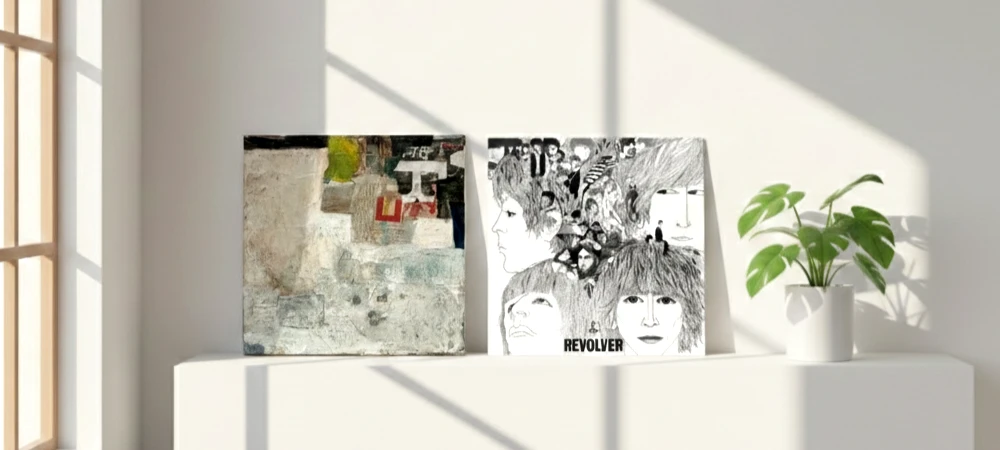
私の作品で画面の多くを覆っている「白」は、ただの空白ではありません。それは「塗り重ねられた時間」です。
ジョンが音を重ねて作ったように、私も過去の記憶や言葉の断片を白で覆い、描きました。右上の鮮やかな色や文字は、騒がしい現実の象徴。それを包み込む柔らかな白の質感は、「わからない明日」を不安としてではなく、すべてを優しく包む「静けさ」や「可能性」として表現しています。
まとめ
一度きりの偶然が生む音を大切にしたジョン・レノン。
私の作品も、偶然重なった紙の端や、その時の感情で動かした筆の跡の積み重ねでできています。
「昨日」の記憶を抱えながら、真っ白な明日へと向かっていく。
何が起こるかわからないけれど、その流れに身を任せることで見えてくる美しさがある。
この作品を通して、そんな「今、ここにある感覚」を皆さんに感じていただければ嬉しいです。
English Summary
This article reflects on my work Tomorrow Never Knows, created in response to the Beatles song of the same title.
What interested me most was not simply the song itself, but the way it broke away from familiar musical structures. Reversed sounds, layered recordings, repetition, and chance were used to create an atmosphere that feels suspended between control and surrender.
That sense of layering connects closely to my own practice. In this work, much of the surface is covered in white. For me, this white is not empty space. It is accumulated time.
Fragments of memory, words, color, and previous marks remain beneath or within the surface. Some are visible, while others are partially hidden. By layering, covering, and allowing traces to remain, I am interested in how different moments can coexist within a single work.
The brighter colors and fragments of text in the upper part of the work suggest the noise and instability of everyday reality. The softer white surface does not erase them completely. Instead, it holds them within another layer, transforming uncertainty into a space of quietness and possibility.
I am also drawn to the role of chance. The edges of paper, accidental overlaps, traces of the brush, and decisions made during the act of making all become part of the final image. I do not try to control every element in advance.
For me, the work is not about illustrating a song. It is about translating sensations of time, uncertainty, transformation, and layered experience into material relationships.
Tomorrow Never Knows became a way of thinking about the present:
carrying fragments of the past while remaining open to what has not yet taken form.
Related themes:
Music / Time / Memory / Layering / Chance / Reconfiguration / Presence